I want this…

YouTube Preview Image

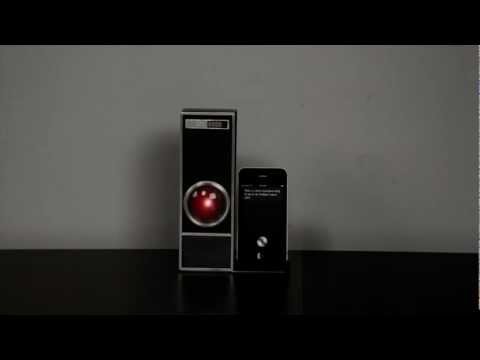
When I originally posted this video, it was without any commentary, and I let the post title speak for itself.  At the time I thought it an interesting piece of tech which tied loosely to the course because we had looked at H.A.L. through the film festival.  Reading back through my posts now, and re-watching the clip, I felt it needed further commentary.

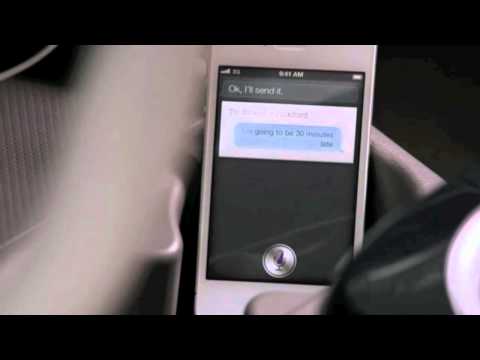
Was I intrigued by the tech because it would add some new unique functionality to my life? I don’t actually own an iPhone, so the fact that this was an Iris 9000 Voice Control Module for Siri (iPhone’s voice activated personal assistant), was not the compelling feature.  I have voice command controls and text to speech functionality on my BlackBerry already, and it’s not a feature that I use, so that wasn’t it either.

Perhaps it was to have a conversation piece for display… something from popular culture that not everyone would understand, but would be kitschy to have.  I think this is the most likely case… but then it got me thinking about another reason why this might be desirable.

We tend to have the need to humanize our things.  We give them faces, human voices, visual cues to interact with, so that we can relate more readily to them.  Pressing the button on the front of the phone and speaking to an ethereal voice somehow seems more natural if the voice is represented by a familiar physical object (with a glowing red light).  Giving it a recognizable persona somehow makes it seem more real.

YouTube Preview Image

Posted in Uncategorized | Comments Off

Week 4 Summary

I tossed around ideas for my visual artifact for most of the week.  I went from playing with PowerPoint, and Xtranormal, to doing a photo mash-up.  The technology wasn’t the issue, but the focus of the artifact was.  I couldn’t decide what to do.  I got hung up on the idea of a haunted classroom, and students as ghosts, but I couldn’t work out how to create the visual for it.  Should I try to take images of students and make them look ghostly, or should I find students with blank stares and leave it to the viewer to infer.  How literal should I be?

I decided to re-read my blog postings, and search for inspiration.  I kept coming back to the questions I asked in my Week 2 Summary:  “Why is it a recurring theme in science fiction that android’s want to be more human, or the perfect human?”  I decided to do a play on that, and I Googled (is that a word now? If so, it hasn’t made it into the spell check yet) androids and variations of the theme of wanting to be human, and came up with lots of possibilities.

I wish I could remember which combination of parameters in a Google search originally led me to the following image…

It was easy enough to find again for this post using Wizard of Oz as the keywords and searching through images, but I remember finding it while searching android as a keyword.  Serves me right for not taking better notes. :(

In any case, it was this image that my twisted brain turned into a relationship between androids and wanting to find fulfillment, and completion in their search for humanness, and the Wizard of Oz.  It just seemed fitting to replace the characters on the yellow brick road with some familiar robots.

There were a lot to choose from, but I discounted the Robin Williams character in Bicentennial Man, the Sonny character in i, Robot, and the various Blade Runner characters.  I tried somehow to bring in Darth Vader, but then wondered how I would differentiate between cyborgs and androids, so I decided against using him.

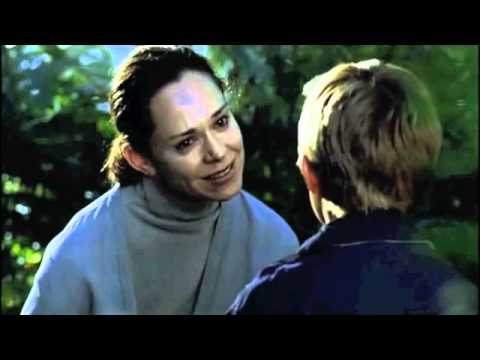
In the end, I chose the child robot from A.I., David, who would represent the Dorothy character, with the little robot dog as TOTO.  (I honestly didn’t think much about the dog at the time,  I just wanted a little dog, and I wanted it to be mechanical.  Looking back now, if an android were to have pet, would it choose a robot dog?)  I chose the David character because like Dorothy who sought to return to the love of her family and friends, he just wanted to be loved.
YouTube Preview Image

DATA I envisioned as the Scarecrow since the Scarecrow seeks a brain, but is already unknowingly the “wisest man in Oz.”  DATA seeks to become human, but as is inferred in many episodes, is perhaps the most human of them all.

YouTube Preview Image

Johnny 5 is the most robotic looking character I chose, and I used him to represent the Tin Man.  Johnny 5 gains sentience through an accident and spends the film learning about life and shying away from his destructive military programming.  I felt it was an interesting correlation to gaining respect for life and finding a heart.
YouTube Preview Image

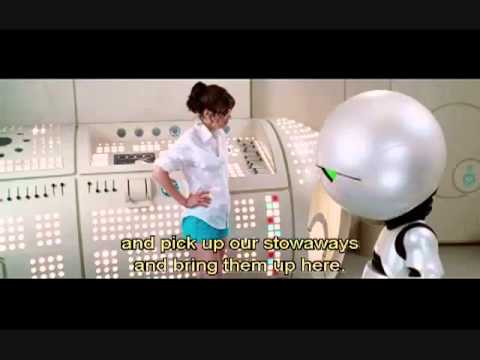
Finally, Marvin from the Hitchhiker’s Guide to the Galaxy seemed perfect as the Cowardly Lion.  Both characters are so over the top and dramatic that they just seemed to fit.
YouTube Preview Image

I found the images through Google and used Microsoft Paint and Word to bring them together.  I suppose that I could have used Photoshop to make it more polished, but the result I achieved through Word suited my needs, so I went with it.

I loved reading the comments, and I think in many ways my view of the piece that I created has now changed after reading the viewpoints of others.  I can see what they see, and am surprised by what others have found or inferred that was beyond my original intent.  It makes me wonder how I am perceiving other people’s works, and how my perception differs from the intent of the author.  Do any of us ever really see the original author’s point, when we look at things with our own life goggles…

Posted in Uncategorized | 1 Comment

Visual artifact

Androids in OZ


After reading the comments I thought it appropriate to provide a closer view of the elements I chose for my artifact:

Johnny 5 Artificial Intelligence Data Marvin
Johnny 5 A.I. DATA Marvin
Posted in Uncategorized | 8 Comments

Week 3 Summary

A fairly quiet week for me due to personal obligations, but I was able to attend the Skype chat…  glad I made it since there were some interesting discussions.

Bayne: Reflecting upon the readings for this week, I tweeted about the idea of students as ghosts in a haunted classroom…  I was reading the Bayne article while proctoring an exam, and observing the students, and the line “the ontological blurring of being and not-being, presence and absence online…” inspired my tweet.  I saw the students attending a traditional class, but at the same time not being 100% present in that they were participating in other worlds through their BlackBerrys, or surreptitiously through the web while they thought I wasn’t looking.

How much presence constitutes attendance to the class?  Does the physical body just need to be in a seat, or is mental presence necessary as well?  Can any of us say that we are truly fully present in anything we do… especially when so many things are calling for our attention?

I would argue that a new vision of a university must harness the idea of ghostliness, and challenge students in new ways to retain their presence in the learning process.  The online/distance model forces students to engage more actively in the class in order to be credited for their work.  The work can be done at any time, anywhere, but it must be done.  The old traditional method gives them freedom to be distracted.  I wonder if it would be possible to successfully blend the two in my classroom, or would it cause chaos?

Kress: I found it hard to read the Kress article without thinking of the medium and message debate again.  Should we concentrate more on the medium (text, pictures) or the message that is being transmitted?  Is how we interpret the message impacted by the medium we choose to share it with?  Is the progression from text to pictures not more to do with our culture than the positives or ‘gains and losses’ of one form vs the other?  As Kress asks “Would the next generation of children actually be much more attuned to truth through the specificity of depiction rather than the vagueness of word?

Treebeard

“One felt as if there was an enormous well behind them, filled up with ages of memory and long, slow, steady thinking; but their surface was sparkling with the present: like sun shimmering on the outer leaves of a vast tree, or on the ripples of a very deep lake. I don’t know but it felt as if something that grew in the ground — asleep, you might say, or just feeling itself as something between root-tip and leaf-tip, between deep earth and sky had suddenly waked up, and was considering you with the same slow care that it had given to its own inside affairs for endless years.”
—The description of Treebeard in The Two Towers Volume III – Treebeard[4] Wikipedia

But which description do you prefer, or is more beneficial to your understanding; the Tolkien words or the Peter Jackson image?  I argue that as Kress states… “words are empty entities to be filled with meaning.”  The image is Jackson’s interpretation of Tolkien’s words, and his image shapes our understanding of the character.  Can we watch the film and imagine Treebeard as looking any different?  We are locked into the imagery, but in reading,  the character can be anything we want…

Thomas: In reading the Thomas article, and the “questions about the impact of computers on literacy (and upon the literary). Is the Internet really changing the ways in which we read, write, and think? Is the book truly dead?“  My first thought was of Amazon.com, and the millions of books they sell…  But then, their e-reader is extremely popular, so is the technology outnumbering the printed book in sales?  It does appear to be so, thus perhaps the printed book will soon be dead…. or perhaps it is that the printed material is just the medium, and the work itself is not dependent on it…  do we need therefore to redefine what the book itself is?

If we are moving into a transliterate world, and we have the technology to broadcast ourselves to the world, does this mean that true literacy will suffer?  Or is it a new frontier, with projects such as A Million Penguins leading the way?  Despite the tendency of our culture towards digital narcissism, surely there are still some quality pieces being created.

As the Thomas article quotes Microsoft National Technology Officer Jerry Fishenden: “The move to the digital era could be as democratizing as the birth of the printing press was in the fifteenth century. It will bring the ability to capture and share human experiences, learning and entertainment in far more intuitive ways than the age of literacy allowed.”  We have reached an age where anyone with a computer can be a published author, information is shared globally in an instant, and you too can be the star of your own world…


Posted in Uncategorized | 3 Comments

Week 2 Summary

Other worlds… a great theme, and one which recurs in many of my favorite science fiction stories.  Taken literally, it could simply be the idea of a world different from our own… another planet, another galaxy, another time, another dimension.  But I feel it can also be about the choices we make… the red or blue pill? Each choice sets you on a new path…  but which is the right path?  What is truth?  How do we know?

rabbit hole

Daniel makes a very interesting point in her blog that I agree with: “we can actually make the astonishing claim that there is no such thing as one absolute definition of reality.“  We can look at a film like the Poetic Holodeck and argue about various interpretations, but what is to say which is the right interpretation?  If the holodeck is sentient and chooses to create a mountain for itself, then why are we questioning its choice?  As far as we are aware, maybe that is the holodeck’s definition of reality.

In World Builder the man creates a world, and rushes to make every detail perfect in anticipation of the arrival of the woman.  But then he hides from her and watches her enjoy his creation.  At the end we find that she is in a coma like state, and in the “neuro holographic recovery unit.”  So an interpretation might be that he is trying to help her recover be recreating a favorite memory… but if we each have our own definitions of reality, his recreation of the memory can’t possibly be the same as hers.  So certainly she would be aware that his creation was not real, wouldn’t she?

If we have no “absolute definition of reality” then how can we hope to share our experiences and life with anyone, when everyone is experiencing their own world?  Perhaps Other Worlds then is not so far reaching as some far off magical land, but simply how the person next to you is experiencing this same existence… and it is as other worldly and foreign to you as science fiction.  But isn’t that what it is to be human?  To strive to understand the different reality, and to be more alike, to find similarities, to share?

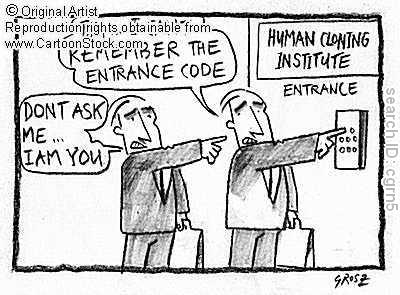
cloning

I always find it interesting that we use stories involving androids and aliens to try and define what it means to be human.  It’s almost as if we cannot look at ourselves, and need to have an other worldy being see us, and to see through his/her/it’s eyes to find clarity.  Are we the collection of our experiences and when we die, we are lost like tears in the rain?

Or are we something more?  What makes us human, as opposed to meat sacks making noise with our meat flaps?

YouTube Preview Image

Is it our individuality, or the sum of our collection of choices that make us human?

choices

Or is it that we have the ability to ask these questions… to wonder about our existence… to try and find connections and similarities with others, but still want to be separate and unique?  Why is it a recurring theme in science fiction that android’s want to be more human, or the perfect human?  Isn’t that just our projecting ourselves onto the android, so that we can relate?  Why wouldn’t the android want to be the perfect android?  I for one can’t wait until a day when I might be able to ask.

Posted in Uncategorized | Comments Off

Week 1 Summary

Trying to sum up my introductions and look back at the first week of the course.  While I have no fear of technology, and readily embrace it, I still had no idea what to “do” with it.  I set up the Lifestream, I pulled in the feeds from Twitter, Delicious, and Tumblr, and then…  what?  I suppose I expected something to happen.  I would magically be provided with a wonderful blog that people would be interested in reading…

Clarke's Third LawBut obviously I need to feed the machine to get the content… which brings me to my thoughts on Bendito Machine.  The machine needs to be fed…it needs the viewers to react and follow it… those distracted (eating ice cream) or who turn away are punished.

The connections made between technology and religion / deity were not ones I had really thought about before viewing the film.  Has television replaced our god?  Or as in the film at the 2:40 mark when the ‘priest’ hits the idol / TV on the top, and it grows horns, has television replaced our concept of the devil?  It seems more the latter in the film as the TV randomly kicks the viewers or jumps out of the way while the viewers are run over by a car. (3:40 mark)  Has the internet killed the old god and now replaced it?

When I watched the eXistenZ clip for the first time, I had no idea what I was seeing, and could not relate it to the course as I had not seen the full film, nor did I understand the context.  It was only during the SynchTube session that it became clear that the characters were playing a game.  Looking back now, when Jeremy asked me to answer my own question about the link between the two clips, and I said “machine as god, or messenger from god in bendito… machine controlling free will in this one, and if we are made in gods image and god gave us free will… machine is god?” I was only tossing an idea out there… but I still believe the link works.  The same link could be proposed for the other clips from 2001: A Space Odyssey, and Colossus in that the machines have become gods in their control over their subjects.

The computer (HAL) tries to control Dave in 2001 and when it cannot, tries to kill him.  Colossus tries to take control of the world, and threatens to kill those that are not compliant.  Bendito’s machine kills those that aren’t following.  The bot/machine/god in eXistenZ tries to kill Jude Law.  The clips don’t make it clear, but one can assume that the characters in the end had to turn off the machines as Dave did to HAL in 2001.  So what is the moral of the story?  In stories of typical dystopian societies, the citizens eventually find a way to escape from the machine/god/big brother control and regain their free will.

Are we destined to create a dystopia?  Is Hand’s “Global Information Culture” where everyone has access to information the first step in creating a society where we unconditionally trust the machine for information / culture / spiritual nourishment?  Information itself may not be dangerous, but the context in which it is offered can change our outlook.  How far fetched is it to imagine a time when the machine begins to decide the context in which the information is shared, in order to maintain order, or help guide us, or establish control?  Excuse me while I go start building my bunker to hide from Skynet

YouTube Preview Image

Posted in Summaries | Comments Off

Thoughts on Cyberspace

Hackers - Crash and Burn
Hackers - IMDb
While reading the Bell (2001) article I kept remembering the movie Hackers from 1995.  The teen stars are counter culture and fighting the man… everything from their style of dress to their attitude is counter culture, punk influenced… and perhaps could be described as cyber punk.

I loved the idea of being able to use a computer to change and shape the world.  Perhaps this and other similar movies are why I started studying computers in the first place.  Or maybe just my desire to “fight the man.”  Looking back now, I’ve come to realize that although I still root for the underdog and the anarchists, I have become the “man.” :(

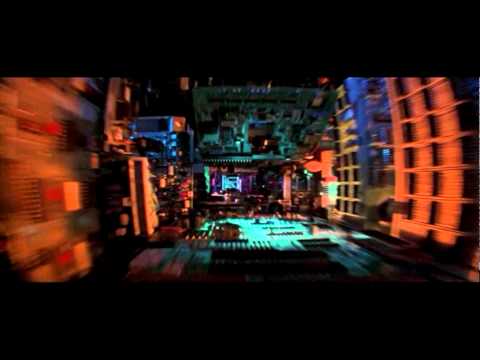
What struck me most about the movie, and about most Hollywood movies dealing with computer hacking is not only how they make it seem so easy, but how graphically they illustrate the process.  Hacking the Gibson (perhaps an homage to William Gibson who Bell identifies as “the author who defined the genre as well as defining the cyberpunk version of cyberspace”)  is seen as flying through building like structures to a destination… As Bell (2001) describes cyberspace as “resembling the urban landscape, with flows of data like traffic and banks of data like skyscrapers”

YouTube Preview Image

The Matrix
Has Hollywood’s vision of cyberspace been accepted as true by the masses?  With the popularity of films like the Matrix and Tron, we must ask if those who do not know any different actually believe that data can be interacted with in this way?  Is it just that it is so alien that they must humanize it, and associate it with things they could relate to?  i.e. urban landscapes

If we imagine taking a person from a culture not exposed to technology, where perhaps they believe that taking a picture steals your soul, how might they react to being exposed to a virtual world like Second Life?  Could they be convinced that the avatars which they could create and control are not in fact part of themselves that have become integrated with the machine?  Is Hollywood playing into this notion that we are perhaps afraid of what cyberspace might become, or is it as Bell states that we are constantly “shifting our overall perspective on cyberspace and our place within it?”

Posted in Readings | Comments Off

Thoughts on HAND

My initial thoughts while reading the Hand article were that the idea of a “Global Information Culture” (p 16) is a nice idea, but still far from reality.  The ‘western’ modern world, or first world nations may have access to this, but there are still large parts of the population that do not.  How will their needs be addressed in the new ‘cyber-republic?’

In the past we were spoon fed our information through the various media.  We saw what the media producers and governments wished us to see.  There were limited viewpoints produced simply because of the costs associated with distribution, or due to government restrictions.  For the most part we accepted this information as fact because we weren’t aware of any alternatives.

With the advent of the internet, information is readily available at little to no cost to produce and distribute.  Government restrictions on the types of information shared can be bypassed, and the ‘truth’ will get out.  But who’s truth is it?  How do we know?  Why would the farmer in China who has never been anywhere question his government’s politics if that was all he ever knew?  If his government continued to speak out against capitalism, why would he seek to question those beliefs?  Even though more information and another ‘truth’ may be available to him, why would he choose to seek that out… unless someone were to show it to him.

Even though the internet allows us access to many viewpoints and many ‘truths’, do we as a culture seek out alternatives to the traditional, or we do simply continue to go with what we know?


Posted in Readings | 5 Comments

Hello world!

This is my first post in the E-learning and Digital Cultures 2011 course at the University of Edinburgh.

I’m simply playing for now, and will begin posting in earnest once I’ve set up my lifestream.

Posted in Uncategorized | 2 Comments