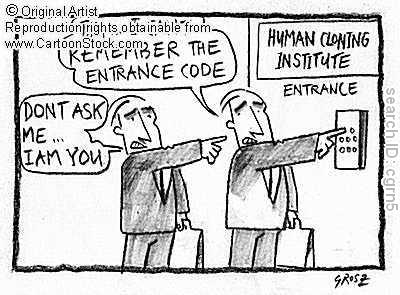
I’ve been looking back at how my lifestream developed last week, keeping in mind my thoughts on its, possible, randomness and it struck me that, rather than random it was developing in a different way than we normally expect any piece of writing to do so. So I took a look back at Deleuze and Guattari’s notion of the ‘Rhizome’ and it seemed to be quite apt in more ways than one –
http://ensemble.va.com.au/enslogic/text/smn_lct08.htm
The above is a link to a site on electronic writing, with examples, theory and so on, that quoted D&G’s explanation of the rhizome, including – ‘It has neither beginning nor end, but always a middle (milieu) from which it grows and which it overspills’ – which seemed rather apt, along with the notion of a rhizome as an organic, non-linear, interconnected, manner of ‘writing’.

The site also suggested that ‘the concept of the Rhizome as developed by Deleuze and Guattari in A Thousand Plateaus is highly relevant to a discussion of ‘a shifting configuration of media-elements; a conflation of language systems’ and goes on to discuss the notion of signification of image, sound and text. This already links my first week’s thoughts, from Hand, on ‘the global circulation of information (whether images, text, sound)’ (p.18), and my looking back at Barthes Image Music Text, with my second week’s thoughts on how the lifestream is developing, and forward to this week’s reading of Bayne on the strangeness of digital space, presence etc. and of Kress on signifiers and signs and the relation of words or images to things. I’ll leave any more thoughts on Kress and linguistic theory and on ‘a shifting configuration of media-elements’ until the end, or perhaps middle, of this week’s lifestream.
Carrying on from last week, and in relation to Hand on whether digital culture is a promise or a threat, a freeing or an enslaving, there seems to be a stream of stories in the news that continually address aspects of this dualistic, or sometimes polarized, view. Looking for good scholarly sites on digital culture I came across
http://www.digitalcultureandeducation.com
and looking back through the editions found an article called ‘Look at me! Look at me! Self-representation and self-exposure through online networks’. The nuances of representation and exposure seem to me to exemplify the fine line between promise and threat. Our society values the notion of individuality, self-representation and expression and online networking provides a global stage. However, as discussed this week with a colleague, we are increasingly worried about the selfishness of our society where self-expression, or exposure, often takes precedence over a communal approach. Of course it could be argued that Facebook is a global community, and it has that element, but it is also a place to perform and sometimes its excesses and dangers are all too apparent. Or one might think that, in fact, Facebook and other social networks, offer no individual expression or freedom at all, but are just new ways to control as suggested in the Guardian’s article on ‘digital serfdom’ –
http://www.guardian.co.uk/technology/2011/sep/27/facebook-open-graph-web-underclass?CMP=twt_gu
Perhaps the problem with digital culture is that the promise and the threat are co-existent and difficult to control given the internet’s lack of boundaries spatially and, perhaps, ethically. For instance, I looked at the Guardian story about an ITV programme mistakenly using video game footage as ‘factual footage’ –
http://www.guardian.co.uk/media/2011/sep/28/danger-youtube-factual-footage?CMP=twt_gu
I thought this interesting in light of Mark Poster’s question ‘how can mediated cultural acts be evaluated?’ (Poster 2006, 141). His discussion over whether the same ethical values can be applied to new media, or even if those ethics exist(ed) outside new media, left me asking if it really mattered. Of course it should matter that a news programme, albeit mistakenly, uses an ‘unreal’ image to illustrate a ‘real’ story. But with media manipulation, and the fact that we never really know if what we see online or in the media is authentic, I wondered if using a false image really mattered if it represented the real. The rhizome-like nature of my lifestream again becomes apparent, looking forward to the notion of words/images and authenticity this week.
I suppose somewhat fittingly, I was also thinking about portals last week, with the theme of other worlds; portals being links between the ‘real’ and the ‘other’, or as often seen in fiction, ‘fantasy’. While watching the Matrix clip (I have to admit never having wanted to watch the film…) I noticed Neo referred to the Matrix as ‘everywhere….it is all around you’ and I began thinking about ways that reality and other worlds are related. In much fantasy literature the real and the other are separate entities with a portal through which characters must pass to go from one to the other; think Harry Potter or The Lion the Witch and the Wardrobe or Star Trek’s The Guardian of Forever:


The Star Trek portal is interesting in that it links an ‘other’ SF world with what we consider ‘real’ historical worlds. Of course there are fantasies of other worlds that are self-contained and do not reference any authentic world literally, such as Lord of the Rings. But perhaps, as with the clip from existenZ, digital culture increasingly blurs the lines between the ‘real’ and the ‘other’. And with that we are back to the rhizome (un)structure, looking forward to Bayne’s paper on uncanny spaces and identities.