Week 5 Lifestream Summary

Virtual communities is the theme of this block and our task is to build an ethnography,  something I haven’t attempted before.  In order to get an understanding I read and re-read the recommended readings. If I understand Hine (2000) correctly, an ethnography is an anthropological approach to studying cultures and should ‘share a a fundamental commitment to developing a deep understanding through participation and observation’.  I don’t think this ethnography will offer ‘the promise of getting closer to understandingthe ways in which people interpret the world and oranise their lives.’ (Hine 42) At best it will offer a ‘snapshot’ of a particular moment in time with a particular group of people.

I spent a good deal of time trying to find a suitable ‘community’. For Bell (2001) “…community arises from shared interests’. Flickr has numerous groups that share a common interest so I tried looking there. Unfortunately, this site is blocked.  Such group’s wouldn’t qualify as a community by Sardar’s interpretation, quoted in Hine;  ‘Belonging and posting to a Usenet group, or logging on to a bulletin board community, confirms no more an identity than belonging to a stamp collecting club…’  So how will I be able to recognise which is a ‘group’ and which a ‘community’?  Kozinets (2010) states that ‘the ways in which group norms develop and the importance of group identity are very similar in online and off-line groups.’ Hmm, so it’s not going to be so easy then.  After searching through various groups I settled on Food.com and posted my idea to the Holyrood Park discussion forum. It wasn’t that interesting to me but I felt my choice was limited.

When Jen said that this task wasn’t being assessed and should be fun it made a huge difference to my approach.  I have the FemaleScienceProfessor as an RSS feed to my lifestream.  I enjoy reading her blogs and the comments made by other science bloggers.  I now plan to do my ethnography on Science Bloggers.  I find this group more interesting and will it will be fun finding out whether or not they can be classed as a ‘community’.  To do this I shall follow the form suggested by Hammersley and Atkinson’s (quoted in Hine 41) by “ …participating, overtly or covertly in people’s daily lives for an extended period of time, watching what happens, listening to what is said “.

I had hoped to store images in my Flickr account but that still isn’t working. I don’t think it has anything to do with censorship because it linked with my lifestream at the beginning. I have a Picasa account but haven’t tried it out yet.

Bookmarking is also proving problematic.  Again, at the beginning my link with Delicious was working. As I couldn’t fix the problem I resurrected my Diigo account but  it doesn’t appear to be working either.

I know that my YouTube link is working.  After looking at the Rheingold video and checking out the WELL site, I had a search and found another Rheingold video that I added to my favourites. That has appeared in my lifestream.

I notice that my colleagues are busy tweeting and I haven’t contributed as much as I’d like.  Either Twitter is extremely popular or my Internet can’t handle the traffic, but I receive this sign quite often.


Posted in Uncategorized | Comments Off

LifeStream Reflections Week 5 – Community, Crowds and Networks of Individuals

This week I started out by trying to get to grips with the concept of community and at the end of the week I’m not sure I’m much further on. I began with empathising with Rheingold’s vision of the lost local community regained in the virtual environment I visited The Well where it seemed that members had indeed found value in the connections they were making with others in their favourite conferences. Evidence in gains of ‘social network capital, knowledge capital and communion’ as Rheingold articulates in his seminal book ‘Virtual Community’ are  evident here http://www.well.com/raves/ As a virtual meeting place the Well prides itself on the authenticity of interactions  “As a WELL member, you use your real name. This leads to real conversations and relationships.” I was struck by how long this community(ies) had been in place and wondered if the Well was the same type of community now as when it had started out.

Buckman & Jensen chart the life and death of an online community. For me this highlighted the ephemeral nature of virtual community which strikes me as a feature that distinguishes them from ‘real’ communities. Virtual communities that emerge around an image in Flickr or a blogpost or a youtube video may be extremely short lived. Perhaps one reason is that there are relatively few social costs associated with joining or leaving these communities. However these might not be communities at all but mere associations. Bell for example sees longevity, critical mass and human feeling as criteria for distinguishing an association (or market segment) from a community. For me longevity seems less important then human feeling.

Buckman & Jensen also offer a  much looser definition of community as “a group of people interacting with one another in some fashion” and Fish has a different take altogether. His idea of interpretive communities  brought an interesting link with Kress’s work. For Fish the way we read a text is strongly culturally determined so the interpretive community is one that shares a “reading”. I wonder if the communities that form around particular art genre for example on DeviantArt http://www.deviantart.com/ are examples of interpretive communities and whether Bell and Rheingold would consider them as communities.

In looking at different definitions and conceptions of community I revisited Wenger’s ideas around communities of practice. “Communities of practice are groups of people who share a concern or a passion for something they do and learn how to do it better as they interact regularly.” http://www.ewenger.com/theory/ Using this definition I wondered to what extent learning might be considered as an outcome of all community interactions, whether these be professionally or socially oriented. Perhaps the difference in a community of practice is that the learning is intentional.

Some interesting questions about the implications of virtual community for real community are raised in one of Wellman et al.’s papers  I came across entitled the Social Affordances of the Internet for Networked Individualism. Here the authors draws on empirical research to explore three possible scenarios a) local communities breakdown (further?) due to the distractions of the internet. b)  “Widely dispersed communities of shared interest become dominant; neighbourhood communities become quaint residuals.” c)  existing relations continue online which enrich existing ‘real’ communities and new virtual communities emerge around shared interest . The World Café is arguably an example of such a virtual community which encourages activism around local issues while emphasises its global reach. The reciprocity of the relationships between community members is highlighted in these tagclouds http://www.theworldcafecommunity.org/page/tag-clouds generated from member profiles.  The norms of the community are engagingly expressed in this graphic.

Towards the end of this week I discovered Wesch’s Youtube ethnography. Absolutely fascinating as it turns so many of the ideas of virtual community on their head. Authenticity is uncertain,  the individual is foregrounded in a narcissistic way and asynchronous face to face interaction shapes the ‘conversation’ in strange ways. I’m hoping to return to some of these issues in my virtual ethnography.

YouTube Preview Image
Posted in Uncategorized | Comments Off

I want this…

YouTube Preview Image

When I originally posted this video, it was without any commentary, and I let the post title speak for itself.  At the time I thought it an interesting piece of tech which tied loosely to the course because we had looked at H.A.L. through the film festival.  Reading back through my posts now, and re-watching the clip, I felt it needed further commentary.

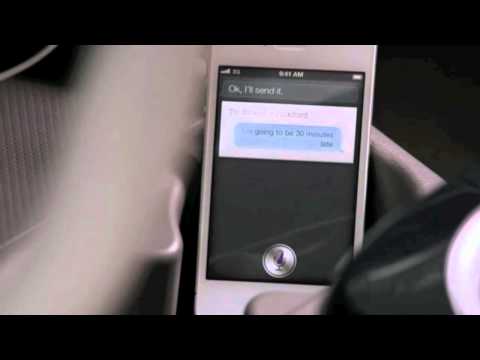
Was I intrigued by the tech because it would add some new unique functionality to my life? I don’t actually own an iPhone, so the fact that this was an Iris 9000 Voice Control Module for Siri (iPhone’s voice activated personal assistant), was not the compelling feature.  I have voice command controls and text to speech functionality on my BlackBerry already, and it’s not a feature that I use, so that wasn’t it either.

Perhaps it was to have a conversation piece for display… something from popular culture that not everyone would understand, but would be kitschy to have.  I think this is the most likely case… but then it got me thinking about another reason why this might be desirable.

We tend to have the need to humanize our things.  We give them faces, human voices, visual cues to interact with, so that we can relate more readily to them.  Pressing the button on the front of the phone and speaking to an ethereal voice somehow seems more natural if the voice is represented by a familiar physical object (with a glowing red light).  Giving it a recognizable persona somehow makes it seem more real.

YouTube Preview Image

Posted in Uncategorized | Comments Off

Lifestream 5

I look at my lifestream and see a sea of blue buttons signifying the resources I diigoed on the web. Among them float orange dots and occasionally a more pictorial and so more picturesque youtube video. They are like sequins or gems among the dominant bookmarking activity. There were more of them last week – I really appreciated the recent exercise in creating a visual artefact as it lured me out of my online den and into others’ spaces where I engaged in interaction with the colleagues. That had a refreshing effect on me and on my perception of the course activity in particular. Not only did it diversify the contents of my lifestream but also created a sort of belonging and collectivism as if it validated my presence as a community member. Spurred on by this, I abandoned for a moment my solitary habits of bookmarking and turned to more social tweeting and again engaged in mini exchanges there. Behaviouristic as it might be on the surface, this action-reaction chain in which what you tweet might be fed back to you in a comment or response from another user (human), anchors you in sociality, integrates you into a bigger fabric of connections. Suddenly you become a little dot (sometimes even a gem perhaps) in the überlifestream of the web. You become a node in the network from George Siemens’ and Stehen Downes’ connectivism (diigoed on a few occasions last week too).


A Network of Gems


Posted in lifestreammaries | Tagged , , | Comments Off

Ai, Ai, Ai …

The automated recloning worked just as planned… and after a server upgrade to OpenSim 0.7.2 Dev Master r/17006 the two autoreplacing clones I had set up on the Avatar Identity region reappeared …

Posted in EDC11 | Tagged , | Comments Off

Week five: A reflection of the community

Week 5 has been taken up with reading on ethnography, searching online for papers or other sites on ethnography and on communities and trying to find an ‘online community’ that would be interesting and ethically viable for an ethnographic study. In terms of my lifestream, I’ve become aware that I tend to use the same particular feeds, twitter and delicious, most. This is because through twitter I can communicate links, ideas etc. directly with my classmates as well as posting to my lifestream, and because I like delicious as a way to bookmark not only for my lifestream but for my own record of sites, papers etc. I use tumblr for quotes only, as it often freezes my desktop for some reason so can be a bit unreliable. I’ve also tried to remember to use youtube this week. Some of my feeds are reliant on how often an RSS comes from a particular website, such as Christopherbaker.net, which can be infrequent. This week I tried to add readernaut but, although I signed up, for some reason I’ve not had an email to validate and on investigating have not been able to sort it out so I will look at using a different reading feed. I’ve also added stumbleupon which is a bit hit and miss but I quite like the random nature of it.

In investigating ethnography, so that I knew what it was I was supposed to be doing this and last week, I started out with Hine to get an idea of ethnography, and specifically virtual ethnography. What interested me here was Hine’s description of ethnographers as moving from looking at distant cultures to  looking at more ‘limited aspects: people as patients, as students, as television viewers, or as professionals’ (41). This seemed to reflect a more global than geographical emphasis in digital ethnography, although as I have looked at online communities (and Bell quite rightly problematises this term), I’m not sure that there are not still geographical boundaries, as well as social ones, that circumscribe those communities. For instance, on Twitter, @abuneil highlighted online communities that were of particular interest to those from a Bengali background.

On social boundaries, Bell (2001), considering the arguments against online community, points out that ‘bunkering in [sheltering from RL in a self-selecting online community] means cocooning oneself from the “contamination of pluralism’ found in the RL city’ (106). The ‘community’ I eventually decided to look at for my ethnography,  http://www.mumsnet.com/, has been accused of having very particular geographical, class, social and political boundaries.  Early on in our discussion for this block’s task to create a virtual ethnography, @DGdotNET asked whether it was possible to be an ‘objective digital ethnographer’, a view Hines also takes saying that ethnography ‘faced challenges concerning objectivity and validity’ (41). At the time I turned to Foucault’s The Order of Things as I do like his notion that our viewpoint is often dictated by fundamental codes, but I also like his view that we create taxonomies through which to view things.

This lack of objectivity could be even more of a problem for the digital ethnographer who may come, as I did, to study their community through a filter of existing media perception. This will be something I will consider in my ethnography as it must be acknowledged:

Toby Young

Guardian CiF

As well as looking at media reactions to Mumsnet, I’ve been looking more generally at women blogging and particularly at the phenomenon of ‘Mommy blogging’, a problematic label which might be perceived as positive or negative. The logo of Mumsnet, with its reference to Charlie’s Angels, perhaps unwittingly encapsulates this dilemma of female empowerment:

One of the issues I will be considering when looking at Mumsnet is whether it can truly be described as a community and, also, what a community is for. On the first point Bell’s chapter gives some useful insight, in particular I want to consider: the idea of a community existing if  ‘participants imagine themselves as a community’ (102); whether Sardar’s view (quoted in Bell, 101) that merely belonging to and posting on a bulletin board does not confirm a community identity is  a reasonable one; whether Dibbell’s criteria (in Bell, 110) on ‘social contracts’ as a sign of community holds true of Mumsnet; and the idea of the ‘Bund’ as an alternative to community in relation to how Mumsnet functions. I very much liked the idea of Bund as ‘an elective group, bonded by affective and emotional solidarity, sharing a strong sense of belonging’ as a way of assessing Mumsnet, although the notion of the affective and emotional does play into the hands of those who marginalise Mommy Blogging as confirming the private domain of women as lacking in importance, as against those who claim it as an empowering ‘radical act’.

I wonder…….

I became interested in what a community might be for partly through reading Bell on whether online communities come about as a desire to replace the perceived loss of community in RL cities and his quoting Willson on community membership as self-serving – ‘the benefits of membership are often described in terms of the individual member’s quality of life, rather than in the quality of relations between subjects’ (109). In our idealization of RL community we imagine being part of a whole in which the individual is supported and supports, but is this the case with online communities, or are they, as Bell explores in some critiques, leading to increased individuation?

Posted in Uncategorized | Comments Off

A, B, C … Z

Ai, Be, Clones … Zap. I have been putting off upgrades to the Openvue region that hold the AI – Avatar Identity digital artifact… because I have gown quite fond of all those clones and the amusing and strange positions they have adopted as objects and the breeze have moved them a bit and they have started sliding or bumping into one another even when no one is watching and no users are logged in. Some now stand face to face, or up to their knees in water. Its just funny to see what they have been up to when you go in world.

But the time has come to upgrade. The technology for NPCs and avatar clone creation I used is not persistent over server side upgrades, so all the current avatars, and there are a lot now, will disappear… gone forever, zapped. They will exist now only in snapshots, the machinima and in our memories. The next set will not be the same and will never be the “original” artifact. But simply copies of copies of an idea. I will not look on them the same at all.

Luckily I now have in place some new technology still in an experimental form which will reinstate cloned avatars from copies kept as descriptions in note cards – like clones made from the DNA of a cloned avatar! Is this getting a bit deep?

So bye bye now to Ai’s clones and Be’s clones wherever you are in nooks and crannies all over the region, and I can see some of you as green dots in extreme places.

Posted in EDC11 | Tagged , | Comments Off

Midway through the semester – Week 6

Welcome to Week 6 everyone! This is the midway point of the semester, and Sian, Jen and I are thrilled with the lively discussions and exciting work emerging in the blogs and lifestreams so far. Well done to everyone.

You should all have had your mid-point formative lifestream feedback by email last week – if you haven’t received yours, or have any questions, let your tutor know.

This is the week to begin work on your micro-ethnography. You should now have decided what to focus on – if you are still in any doubt, please email your tutor. The discussions in the Holyrood Park Hub and Twitter have been fascinating, and it seems that most people are firming up some really interesting ideas. You can continue to use the Holyrood Park Hub discussion board space, Twitter, and your blogs to discuss your plans and emerging issues with each other.

Remember as you proceed that this is a small and low-stakes project – it needs to appear in your lifestream, but it is primarily intended as an opportunity to be creative and to understand in practice some of what is discussed in this block’s readings. It’s also a way for you to provoke more engaging conversations amongst the group, so do feel free to be experimental and questioning in your process and presentation.

Looking forward to all the ethnographies! Have a super week!

steam-room
Creative Commons License photo credit: Henry Swanson 420

Posted in Uncategorized | Comments Off

Summary: Week 5

Week five already and I am deep into the groundwork for the digital ethnographic study.  I began this week by getting a good understanding of the practices involved in ethnographic research (lifestream 18.10.2011, #2, #3, #4 and #5).  I noted with interest how ethnographic research has found its way out of academia and into the field of Internet marketing (lifestream 18.10.2011 #6) which prompted me to start thinking about the nature of communities, their rules (18.10.2011 #7) and how the bounds of group membership are actually defined (lifestream 19.10.2011 #4).  The Bell text from this weeks reading helped to clarify that somewhat.  I was introduced to the concepts of Gemeinschaft and Gesellschaft (lifestream 20.10.2011 #4) and commented on a similar topic in the Holyrood Park discussion forum.  After considering these ideas, my first impulse was to focus my study on an online Star Wars gaming community of several hundred active members.  However this target community would be difficult to examine given the casual nature of membership and the ability for players that die to respawn with new identities.  The fantasy element also presented a problem when I considered the definition of ethnography as participation given by Hammersley and Atkinson, quoted in Hine in the core readings for this week, that “the researcher does not just observe at close quarters, but interacts with the researched to ask questions and gain the insights into life that comes from doing as well as seeing” (Hine, 2000).  Instead I settled on an newly launched social network named Diaspora which espouses choice, freedom and member ownership of data.

The Hine reading, as well as my personal study for the week got me thinking about the concept of arrival stories within ethnographic research and so I began considering what represents an arrival (and here) within a cyber-community.  In the online community with a prescribed signup process, membership is a highly defined concept, i.e. if you have an account you are by definition a member.  Group membership therefore is insufficient to define ones connection within an online community.  Perhaps the missing element is the idea of reputation within the group, or a general acceptance that the new member is willing to work within the established community guidelines and participate in a productive way.  If this is true then the “arrival” is the creation of connections within the group rather than mere membership.

I’m really looking forward to getting involved with Diaspora and developing these ideas further.

Posted in ELearning and Digital Culture, Miscellaneous Techno Babble | Tagged , , | Comments Off

Week 5 Summary

This week I have been contemplating the most appropriate virtual community in which to base my study. In the interview with Howard Rheingold he makes reference to the ‘Global Community’. Whilst he in clear in stating the global community is not some fluffy, ideological community where everyone is best friends he does raise some interesting points. Namely, a large portion of the world now live in cities and now experience less of the close knit community born in villages where people are concerned about life on a very local scale. This has occurred concurrently with geographical boundaries posing less restriction as travel is readily accessible and geographical boundaries have been dissolved by the risk of global flu pandemics and nuclear war, for example. Reduced community identity on a small geographical scale, development of infrastructure/the WWW and geographical distance becoming inconsequential and the sharing of common concern/interest/belief have paved a way for virtual communities to develop. This shift in community dynamics poses numerous questions as to how people converse and a basis for my ethnography.
I received feedback on my lifestream. As anticipated, it was apparent that my use lifestream is not being used to its full. In an attempt to update my lifestream I found that I had notes scattered across my desk and throughout my hard drive that would suggest I had done some work yet to look at my lifestream one could not tell as much. My course participation is an array of scribbles and links that require structuring to form weekly summaries. Due to (the overused excuse of) work commitments I have found it difficult to participate in the discussions held in Holyrood hub. However, time spent commuting enables me to complete the readings and I have managed to feed a couple of twitter comments into my lifestream. I wonder at times whether it will take the ten weeks of this course to master making regular and varied contributions to my lifestream…slowly I am getting there.

Posted in Weekly blogs | Comments Off